
Enterprise AI Solutions: A Hands-On Framework for Visual Paradigm
In the modern landscape of digital transformation, the gap between deploying a technical solution and realizing its actual business value is often bridged by a single critical factor: Adoption. While organizations may invest heavily in sophisticated AI ecosystems, the technology remains dormant if the workforce lacks the practical skills to navigate it.
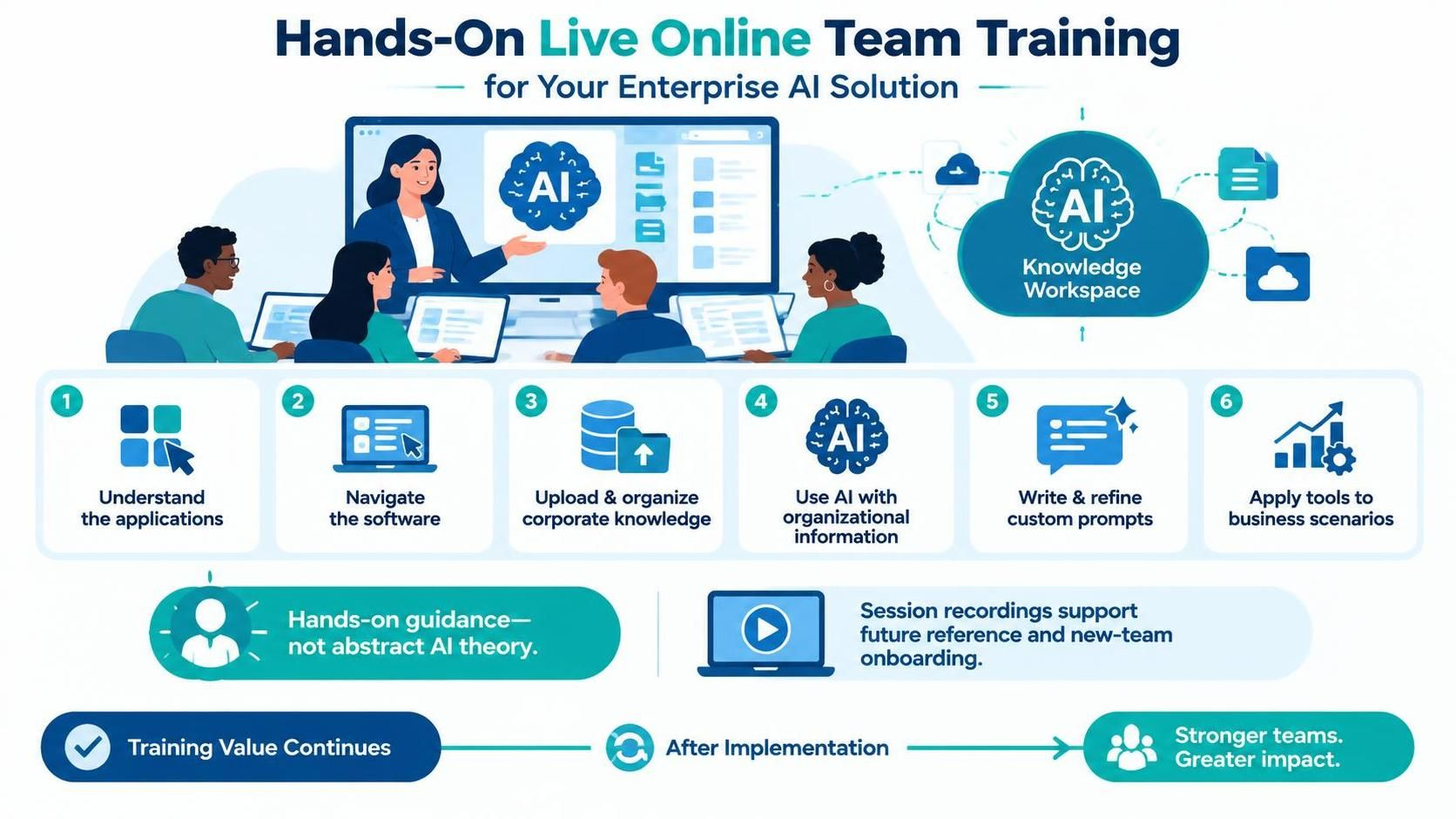
This tutorial explores the strategic architecture of Hands-On Live Online Team Training, a core component of the Visual Paradigm ecosystem. Unlike traditional academic courses that focus on abstract theory, this framework is designed to operationalize AI within the immediate context of an enterprise’s daily workflow. We will dissect the six-step learning journey that transforms a team from passive observers into active AI practitioners.
The Paradigm Shift: From Abstract Theory to Practical Application
Many AI training programs fail because they focus on the “black box” nature of Artificial Intelligence—explaining how the algorithms work rather than how the user should interact with them. Visual Paradigm’s training solution inverts this approach. It prioritizes Hands-On Guidance over abstract explanations.
The core philosophy is simple: employees learn best by performing actual tasks. By grounding the training in practical business scenarios, the solution ensures that the knowledge transfer is not just theoretical but immediately applicable to the user’s role. This approach reduces the friction of adoption and accelerates the return on investment for the AI solution.
The Six-Step Adoption Framework
The training curriculum is structured around a logical progression of skills, moving from basic navigation to advanced prompt engineering. This scaffolded approach ensures that team members build a solid foundation before tackling complex business problems.
Phase 1: Foundation and Navigation
The journey begins with demystifying the tool. Before an employee can leverage AI, they must understand the environment.
- Understanding the Applications: The first step involves mapping the available tools to their specific purposes. Users learn to distinguish between different modules within the Visual Paradigm ecosystem and understand which application is best suited for a specific task.
- Navigating the Software: Familiarity is key to efficiency. This phase focuses on mastering the user interface, understanding the main functions, and learning how to move through the software without unnecessary friction.
Phase 2: Knowledge Management and Integration
Once the interface is mastered, the focus shifts to data—the fuel for the AI engine. This phase is critical for connecting the software to the organization’s unique context.
- Uploading and Organizing Corporate Knowledge: AI is only as good as the data it ingests. Users learn the best practices for uploading, structuring, and organizing corporate knowledge bases, ensuring the AI has a high-quality “memory” to draw from.
- Interacting with AI using Organizational Information: This step bridges the gap between raw data and actionable insights. Users learn how to query the system using their own internal documents, effectively turning the AI into a knowledgeable colleague.
Phase 3: Advanced Interaction and Application
The final phase moves into high-level interaction, empowering users to refine the output and apply it to real-world challenges.
- Writing and Refining Custom AI Prompts: This is the art of communication with the machine. Training covers how to craft precise prompts that yield high-quality results, moving beyond generic queries to specific, targeted instructions.
- Applying Tools to Practical Business Scenarios: The capstone of the training involves taking the learned skills and applying them to real business problems. This ensures that the team can immediately visualize how the solution supports their specific work.
Sustaining the Ecosystem: The Value of Recurrence
A common pitfall in enterprise training is the “one-and-done” approach, where knowledge is acquired during implementation and lost over time. Visual Paradigm addresses this by treating training as a continuous lifecycle.
To ensure sustainability, the solution provides complete training session recordings. These assets serve two vital functions:
- Future Reference: Employees can revisit specific techniques or refresh their memory on complex workflows.
- Onboarding New Members: As teams grow or new members join, these recordings act as a scalable, consistent training library, ensuring that the entire organization speaks the same “AI language.”
Conclusion
By integrating the Visual Paradigm Ecosystem with AI Core Components and this robust Training and Setup Assistance, organizations gain an Integrated Quick AI Visual Modeling and Knowledge Management Solution. This holistic approach ensures that from SME to Enterprise, the technology serves the people, not the other way around.