


Enterprise architecture is a discipline defined by complexity. When organizations attempt to map their structures, processes, and technologies, the sheer volume of information can quickly become overwhelming. This is where the ArchiMate framework steps in, offering a standardized language for modeling. However, a persistent question lingers within the community: Is there a single viewpoint that handles every scenario? 🤔
The short answer is no. The long answer involves understanding the nuances of architecture modeling, stakeholder engagement, and the specific purpose of views versus viewpoints. This guide explores the reality of ArchiMate viewpoints, debunking the myth that one size fits all while providing actionable insights for effective modeling.
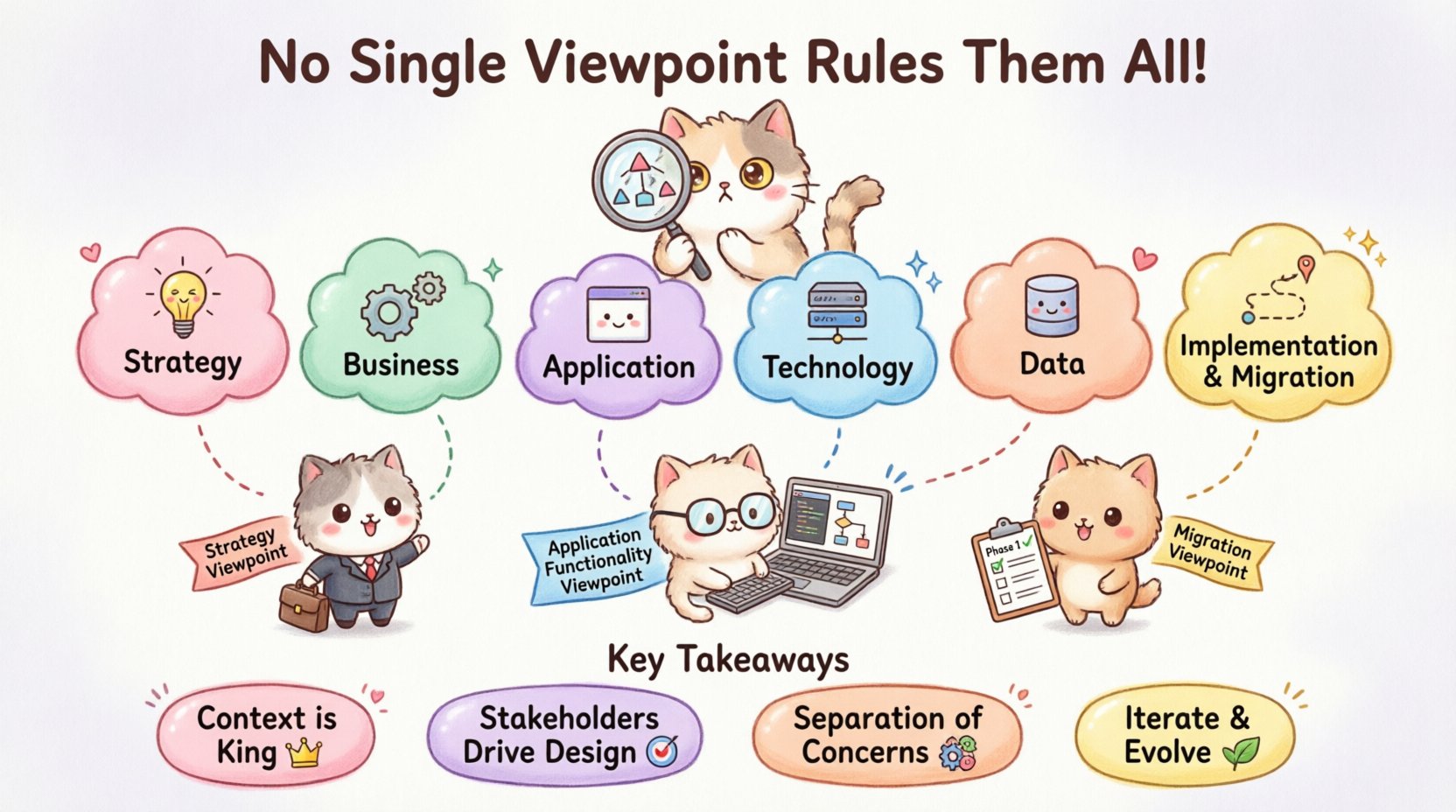
Understanding the Core Concepts: View vs. Viewpoint 🧠
Before diving into the myth, it is essential to clarify the terminology. Confusion between these two terms often leads to modeling errors and misaligned stakeholder expectations.
- Viewpoint: A specification for the creation of a view. It defines the conventions, standards, and concerns relevant to a specific set of stakeholders. Think of it as the rules of the game.
- View: The representation of a system from a specific perspective. It is the actual diagram or model created based on the viewpoint. Think of it as the game played.
Using the correct viewpoint ensures that the resulting view communicates the intended message. If you use a technical viewpoint for a business strategy meeting, the audience will likely become confused. This mismatch is the root cause of the “one viewpoint fits all” myth.
The Myth of the Universal Viewpoint 🚫
Some practitioners believe that a comprehensive model can be constructed using a single viewpoint, often a generic or high-level one. This approach is flawed for several reasons:
- Stakeholder Diversity: A C-suite executive has different information needs compared to a software developer. One cannot satisfy both with the same level of detail.
- Abstraction Levels: Architecture spans strategy, business, application, and technology. A single viewpoint rarely captures the depth required for each layer.
- Communication Efficiency: Overloading a diagram with too much information obscures the key message. Simplicity is key to effective communication.
The 6 Core Layers in ArchiMate: Context Matters 🌍
ArchiMate structures information into six layers. Each layer represents a different aspect of the enterprise. A viewpoint designed for the Strategy layer will look very different from one designed for the Technology layer.
- Strategy Layer: Focuses on business drivers, principles, and goals. It answers why changes are needed.
- Business Layer: Describes the business domain, including processes, functions, and roles. It answers what the organization does.
- Application Layer: Covers the software systems and services that support the business. It answers how the business is supported.
- Technology Layer: Represents the hardware and network infrastructure. It answers where the application runs.
- Data Layer: Often treated as a cross-layer concept, focusing on data objects and information flow.
- Implementation & Migration Layer: Addresses the transition from the current state to the target state.
Attempting to model all six layers with a single viewpoint results in a diagram that is too dense to be useful. Specialized viewpoints are required to isolate concerns.
Comparing Viewpoint Types: A Structured Overview 📊
Not all viewpoints are created equal. Below is a breakdown of common viewpoint types and their specific focus areas.
| Viewpoint Type | Primary Audience | Key Focus |
|---|---|---|
| Business Process Viewpoint | Business Analysts | Workflows and activities |
| Application Functionality Viewpoint | Developers | Software services and capabilities |
| Technology Infrastructure Viewpoint | System Architects | Hardware and networks |
| Implementation & Migration Viewpoint | Project Managers | Transition plans and roadmaps |
| Strategy Viewpoint | Executives | Goals, objectives, and drivers |
As you can see, the audience dictates the viewpoint. A developer does not need to see the high-level strategic drivers in the same detail as a project manager planning the migration path.
Stakeholder-Centric Modeling: The Real Driver 🎯
The selection of a viewpoint should always start with the stakeholder. Who is consuming the information? What decisions will they make based on this model?
Identifying Stakeholder Concerns
Every stakeholder brings a unique set of concerns to the table. These concerns define the requirements for the viewpoint.
- Financial Officers: Concerned with cost implications and ROI. They need viewpoints that link architecture elements to financial data.
- Security Officers: Concerned with risk and compliance. They need viewpoints that highlight security controls and data flows.
- End Users: Concerned with usability and functionality. They need viewpoints that clarify business processes.
The Stakeholder Matrix
To manage this effectively, many teams use a stakeholder matrix. This tool maps stakeholders to their specific viewpoints.
- Step 1: List all key stakeholders.
- Step 2: Define their primary concerns.
- Step 3: Assign a specific viewpoint that addresses those concerns.
- Step 4: Validate that the view created from the viewpoint meets the stakeholder’s needs.
Common ArchiMate Modeling Mistakes 🛑
Even with a clear understanding of viewpoints, teams often fall into traps that reduce the value of the model.
1. Over-Modeling
Creating a model that is too detailed creates noise. If every minor dependency is mapped, the critical path becomes invisible. Focus on the relationships that matter for the specific decision at hand.
2. Ignoring Relationships
ArchiMate is powerful because of its relationship semantics. Simply drawing boxes without showing flows, usage, or access relationships renders the model static. Ensure that connections are meaningful and not just decorative.
3. Mixing Layers Indiscriminately
While cross-layer relationships are valid, mixing too many layers in a single view can confuse the audience. Keep the layers distinct unless the specific purpose of the view is to show integration points.
4. Neglecting the Motivation Layer
The Motivation layer is often overlooked. It connects the “why” to the “what.” Without it, the architecture feels like a list of assets rather than a strategic plan.
Selecting the Right Viewpoint: A Practical Guide 🛠️
How do you decide which viewpoint to use? Follow this logical process.
- Define the Goal: What is the purpose of the model? Is it to plan a migration? To document a process? To assess risk?
- Identify the Audience: Who will read this? Executives, developers, or auditors?
- Choose the Scope: Do you need to cover the whole enterprise or a specific domain?
- Select the Viewpoint: Match the goal, audience, and scope to the available ArchiMate viewpoints.
Managing Complexity with Multiple Viewpoints 🧩
If one viewpoint does not rule them all, how do we manage the complexity of an enterprise? The answer lies in the Viewpoint Matrix.
This approach treats the architecture as a collection of views, each governed by a specific viewpoint. These views are linked through common concepts.
- Consistency: Core elements (like a specific business process or technology component) must remain consistent across different views.
- Traceability: You should be able to trace a strategic goal down to a specific technology component through the various views.
- Modularity: Changing one view should not break the others. This requires disciplined modeling practices.
Real-World Application Scenarios 💼
Let’s look at how this plays out in actual scenarios.
Scenario 1: Digital Transformation
Goal: Move from legacy systems to cloud-native architecture.
- Viewpoint: Implementation & Migration Viewpoint.
- Focus: Current state vs. Target state, transition barriers, and project phases.
- Why not Strategy? Executives need the roadmap, not just the goals.
Scenario 2: Security Audit
Goal: Verify compliance with data protection regulations.
- Viewpoint: Security Viewpoint (often a specialized business or application view).
- Focus: Data flows, access controls, and security services.
- Why not Business Process? Process flows do not inherently show security constraints.
Scenario 3: Business Process Reengineering
Goal: Optimize customer onboarding.
- Viewpoint: Business Process Viewpoint.
- Focus: Activities, roles, and information objects.
- Why not Technology? The underlying servers do not matter for the process flow itself.
Future Trends in Architecture Modeling 🔮
The discipline of enterprise architecture is evolving. As organizations become more agile, the role of viewpoints is shifting.
- Dynamic Modeling: Static diagrams are being supplemented with runtime models that reflect real-time system behavior.
- Automated Compliance: Tools are increasingly used to validate viewpoints against regulatory requirements automatically.
- Integration with DevOps: Architecture views are becoming part of the continuous integration pipeline, ensuring alignment throughout the development lifecycle.
Final Thoughts on ArchiMate Viewpoints 🎓
The idea that a single viewpoint can govern all architectural concerns is a myth that hinders effective communication. By embracing the diversity of viewpoints, organizations can tailor their modeling efforts to the specific needs of their stakeholders.
Remember these key takeaways:
- Context is King: Always match the viewpoint to the context.
- Stakeholders Drive Design: Who is reading the model determines the content.
- Separation of Concerns: Do not mix layers unnecessarily.
- Iterative Process: Viewpoints evolve as the enterprise evolves.
ArchiMate provides the structure, but the practitioner provides the wisdom. Selecting the right viewpoint is not just about following a standard; it is about ensuring that the architecture serves the business effectively. When done correctly, the model becomes a living document that guides decision-making rather than a static artifact that gathers dust.
By moving away from the “one size fits all” mentality, teams can unlock the true potential of the framework. They create a landscape of views that, while distinct, form a cohesive picture of the enterprise. This is the path to sustainable architecture management.
Start by auditing your current modeling practices. Are you using a single viewpoint for everything? If so, it is time to diversify. Identify your key stakeholders and define the viewpoints that best serve them. The result will be clearer communication, better decisions, and a more resilient enterprise architecture.
The framework is robust, but it requires nuance. Respect the layers. Respect the stakeholders. And most importantly, respect the complexity of the systems you are modeling. With the right approach, ArchiMate remains one of the most powerful tools in the enterprise architecture toolkit.
Keep refining your approach. Keep challenging the assumptions. And keep building models that matter. That is the true essence of the practice.