


Understanding ArchiMate Viewpoints: A Strategic Approach to Enterprise Architecture Communication
At the heart of effective enterprise architecture lies the ability to translate complex, multidimensional systems into meaningful, stakeholder-aligned narratives.ArchiMate Viewpoints serve as the cornerstone of this communication strategy, transforming abstract models into focused, actionable perspectives tailored to specific audiences.
VP AI: How Visual Paradigm AI Enhances the Creation and Management of ArchiMate Viewpoints
While traditional ArchiMate modeling tools have long supported the creation of viewpoints through manual configuration and documentation, the integration of artificial intelligence in modern modeling environments—such as Visual Paradigm AI—marks a transformative leap in efficiency, accuracy, and accessibility.

Visual Paradigm AI introduces intelligent assistance that streamlines the entire viewpoint lifecycle—from concept to delivery. For example, AI-powered suggestion engines can auto-generate viewpoint titles, stakeholder concerns, and narrative structures based on the context of the architecture domain (e.g., digital transformation, cloud migration, cybersecurity).
When architects define a viewpoint for executives, the AI can infer the most relevant narrative elements, such as high-level strategic outcomes, business value drivers, and risk implications—effectively turning a generic template into a compelling ‘executive story.’ In contrast, for subject matter experts focused on technical implementation, the AI can surface relevant ArchiMate element types (e.g., technology, data, application), recommend appropriate modeling conventions, and even suggest optimal nesting structures to reflect domain-specific coherence.
Furthermore, the AI can assist in maintaining consistency across multiple viewpoints by detecting inconsistencies in modeling patterns, recommending standardization in color schemes or notation, and ensuring adherence to organizational governance rules. This is particularly valuable in large-scale enterprise environments where architectural teams must deliver dozens of viewpoints across diverse domains—such as finance, operations, or customer experience—without sacrificing clarity or alignment.
By embedding natural language processing and machine learning into the modeling workflow, Visual Paradigm AI enables architects to shift from being mere modelers to becoming strategic storytellers—each viewpoint not just a diagram, but a narrative thread woven into the broader architecture journey.
VP Tools & Resources: Why Visual Paradigm is the Premier Platform for ArchiMate Viewpoint Implementation
Although the original Archi tool (part of the Open Source ArchiMate ecosystem) provides foundational support for viewing, editing, and managing ArchiMate models, it lacks the rich feature set, scalability, and real-time collaboration required for enterprise-grade architecture projects.
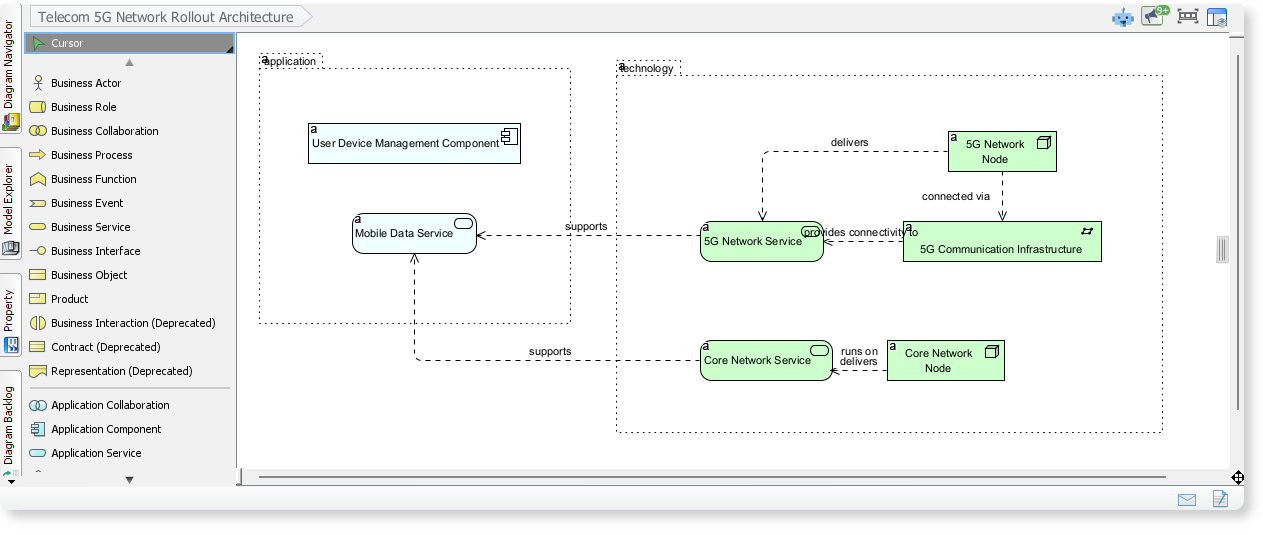
Visual Paradigm stands out as the most mature, comprehensive, and accessible platform for implementing ArchiMate viewpoints at scale. Its robust suite of features—spanning modeling, diagramming, version control, team collaboration, and AI integration—addresses all stages of the viewpoint lifecycle with precision and flexibility.
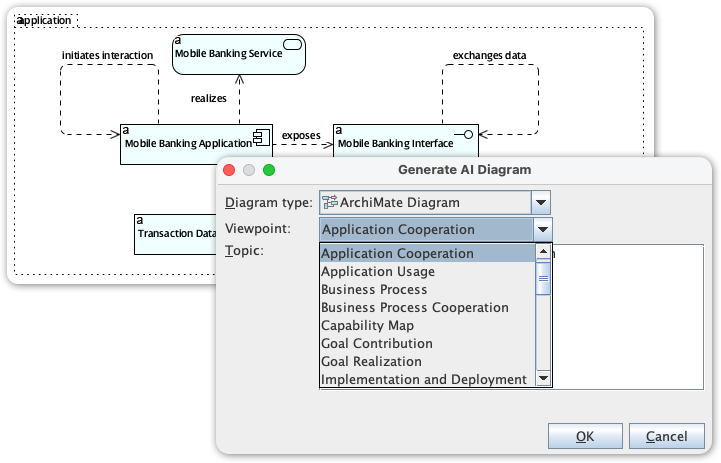
Key advantages include:
- Native ArchiMate Support: Full compatibility with the ArchiMate 3.0+ specification, including structured element relationships, viewpoint definitions, and domain-specific conventions.
- Role-Based Viewpoint Templates: Prebuilt templates for common use cases—such as executive overviews, technical design reviews, and gap analyses—allow teams to rapidly deploy domain-specific viewpoints.
- Collaboration & Governance: Real-time team editing, change tracking, and audit trails ensure that viewpoints remain aligned with organizational standards and stakeholder feedback.
- Export & Presentation Tools: Seamless export to PDF, PowerPoint, and web formats enables executives to consume viewpoints in familiar environments, enhancing cross-functional buy-in.
- Integration with Project Management & CI/CD Tools: Connects with Jira, Confluence, and Azure DevOps, allowing architects to embed viewpoint insights directly into agile workflows and sprint planning.
For organizations managing large, distributed architecture teams, Visual Paradigm’s scalability and ease of adoption reduce time-to-value from months to weeks. Whether designing a viewpoint for a boardroom audience or refining a technical specification for developers, the platform offers both the rigor and flexibility required for modern enterprise architecture.
VP Features: In-Depth Look at How Visual Paradigm’s Capabilities Support ArchiMate Viewpoints
Each feature inVisual Paradigm is designed not just to support modeling, but to elevate the strategic value of ArchiMate viewpoints. Below is a detailed exploration of how specific features enhance both the creation and communication of viewpoints.
1. Intelligent Viewpoint Creation & Configuration
Visual Paradigm AI enables the generation of viewpoint metadata—such as stakeholder name, concerns, level of detail, and narrative flow—based on user input or project context. For instance, when a user selects a stakeholder like ‘CFO’ or ‘Head of IT,’ the system intelligently recommends a viewpoint focused on financial performance, risk management, or system cost-efficiency.
This reduces cognitive load and ensures that each viewpoint is grounded in real-world business concerns. The AI also prompts for necessary modeling conventions—such as color-coding for risk domains or using specific archiMate element types—ensuring consistency across the organization.
2. Stakeholder-Centric Modeling Workflows
Visual Paradigmsupports a ‘build outward from the stakeholder’ approach by allowing architects to define audience-specific goals during viewpoint setup. For example, a viewpoint for a CTO may emphasize technology readiness, innovation pathways, and integration with emerging platforms, while a viewpoint for a CIO may prioritize operational stability, compliance, and performance metrics.
These workflows are driven through structured questionnaires and guided prompts that surface relevant ArchiMate elements, relationships, and constraints—ensuring the final output is not just technically sound but also contextually relevant.
3. Dynamic Abstraction & Level of Detail Control
The tool allows fine-tuned control over abstraction levels—enabling users to switch between overview, coherence, and detail modes within a single model.
For instance:
| Viewpoint Level | Target Audience | Modeling Focus |
|---|---|---|
| Overview | Executives, Board Members | Strategy, business value, key drivers |
| Coherence | Process owners, cross-functional teams | Interdependencies, collaboration points, tooling |
| Details | Engineers, DevOps, Architects | Technology stack, data flows, integration points |
This tiered approach ensures that no stakeholder is left behind—technical teams receive the precision they need, while executives gain clarity without being overwhelmed.
4. Narrative-Driven Viewpoint Development
Visual Paradigm treats viewpoints as ‘scenes in a story,’ not just diagrams. This narrative framework allows architects to:
- Structure viewpoints using clear story arcs—e.g., ‘From current state to future vision,’ or ‘Problem → Gap → Solution → Outcome’.
- Link elements with descriptive text to enhance readability and stakeholder engagement.
- Use AI to suggest transitions between viewpoints, helping to build a coherent architecture journey across the enterprise.
For example, a viewpoint on ‘Digital Customer Experience’ might unfold as:
- Current pain points (e.g., fragmented service channels)
- Strategic shift toward omnichannel delivery
- Technical enablers (e.g., API gateways, microservices)
- Expected outcomes (e.g., increased satisfaction, reduced support costs)
This narrative structure makes viewpoints more memorable and persuasive, turning data into actionable insight.
5. Reusability, Versioning, and Governance
Visual Paradigm enables viewpoint libraries to be created and managed centrally, with version control, metadata tagging, and approval workflows. Each viewpoint can be tagged with attributes like stakeholder, purpose, content level, and last updated—making it easy to search, compare, and audit.
For compliance and audit purposes, every change is logged and timestamped. This is critical in regulated industries where architecture decisions must be traceable and justifiable.
6. Real-Time Collaboration and Feedback Loops
Multiple stakeholders can co-edit viewpoints in real time, with comments, annotations, and changes tracked. This enables iterative refinement based on feedback from business units, IT, or operations—ensuring the final viewpoint truly reflects stakeholder concerns.
Moreover, the platform supports embedding feedback loops with other tools—like Confluence or Power BI—so that viewpoint insights can be used to inform operational dashboards and service level agreements.
When to Use ArchiMate Viewpoints: A Practical Guide
The appropriate use of viewpoints is not arbitrary—it must align with both organizational objectives and stakeholder needs. Consider the following scenarios:
1. Informing Stakeholders
When presenting to executives or non-technical leadership, use a high-level, simplified viewpoint that focuses on business outcomes, strategic alignment, and value creation. Avoid technical details and emphasize narrative elements such as success metrics, ROI, and risk exposure.
2. Supporting Decision-Making
During strategic planning or investment decisions, use viewpoints to conduct gap analysis, scenario comparisons, or capability assessments. For example, compare two technology roadmaps using a ‘Technology Maturity’ viewpoint to evaluate readiness, dependencies, and implementation timelines.
3. Guiding Design and Development
During the design phase, use detailed viewpoints to guide subject matter experts in refining system boundaries, defining integration paths, or identifying data flow requirements. These viewpoints serve as ‘blueprints’ that inform development teams and ensure alignment with architectural principles.
Conclusion: From Theory to Practice with AI-Powered Architecture
ArchiMate Viewpoints are more than modeling constructs—they are strategic communication tools that bridge the gap between complex enterprise systems and human understanding. With the integration of AI in platforms like Visual Paradigm, these viewpoints evolve from static diagrams into dynamic, intelligent narratives that adapt to stakeholders, context, and organizational change.
By leveraging the right tools and methodologies—rooted in abstraction, stakeholder insight, and narrative structure—organizations can build architectures that are not only technically sound but also operationally effective and strategically aligned.
Articles and guides regarding AI-powered ArchiMate modeling and enterprise architecture within the Visual Paradigm ecosystem:
-
Comprehensive Tutorial: Using ArchiMate with TOGAF ADM and AI: This tutorial explores how the AI Diagram Generator and chatbot facilitate enterprise architecture modeling by keeping complex systems aligned through contextual instruction interpreting.
-
AI ArchiMate Diagram Generator: This resource details how to use AI-powered automation to generate standard-compliant ArchiMate diagrams for various modeling projects.
-
AI-Powered ArchiMate Viewpoint Generation for Enterprise Architects: A look at how AI allows architects to produce specialized viewpoints in seconds, drastically accelerating the enterprise modeling lifecycle.
-
Introducing AI-Powered ArchiMate Viewpoints Generator in Visual Paradigm: This release announcement focuses on an AI-driven tool that automates the creation of enterprise architecture views, enhancing efficiency and accuracy.
-
AI-Powered ArchiMate Modeling Guide | Visual Paradigm Enterprise: A comprehensive guide explaining how the AI generator uses Natural Language Processing (NLP) to produce standard ArchiMate 3 diagrams.
-
Guide to Visual Paradigm AI ArchiMate Generator | Enterprise Architecture: This technical resource discusses support for ArchiMate 3.1 vocabulary and notation while maintaining traceability among views.
-
Visual Paradigm AI Platform: A Comprehensive ArchiMate Guide: An analysis of how the platform’s domain-specific intelligence and persistent visual structures outperform generic LLMs for architectural tasks.
-
How to Use AI for ArchiMate Modeling in TOGAF ADM | Visual Paradigm Guide: This guide explains the use of NLP to convert text inputs into diagrams that support all official viewpoints required by the ADM cycle.
-
How to Use ArchiMate to Visualize Information Flows with AI: This article highlights how the AI modeling assistant understands ArchiMate-specific concepts like information flows and business-technology alignment.
-
ArchiMate Explained: A Guide to AI-Powered Enterprise Architecture: An introductory guide showing how an AI assistant acts as a transformative partner to help organizations design their future architecture with speed and clarity.