


Understanding the Motivation Layer in Enterprise Architecture
The Motivation Layer in ArchiMate forms the foundational layer of any robust enterprise architecture, representing the ‘why’ behind strategic decisions. Unlike technical or business layers that focus on ‘what’ or ‘how,’ the Motivation Layer captures the intent, objectives, and underlying drivers that shape the entire architecture. This layer is instrumental in aligning technical initiatives with business outcomes, ensuring that every architectural decision serves a verifiable strategic purpose.
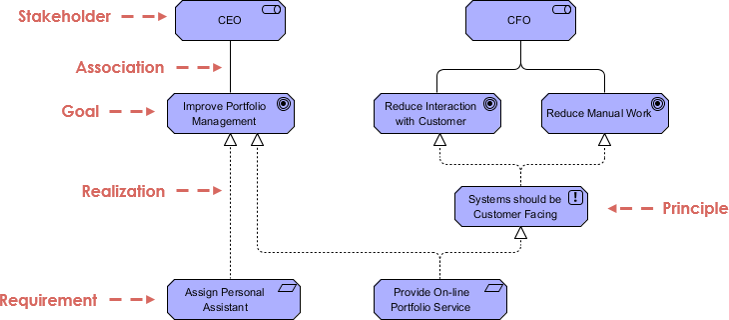
Key elements within the Motivation Layer include goals (e.g., ‘improve customer satisfaction by 30% by 2026’), principles (e.g., ‘customer-centricity is non-negotiable’), requirements (e.g., ‘reduce response time for support tickets’), and outcomes (e.g., ‘a 24/7 support platform’). These elements are not just abstract statements—they are actionable, measurable, and traceable to business value creation.
Effective modeling of this layer requires structured approaches that reflect real-world stakeholder dynamics. To this end, ArchiMate defines several specialized viewpoints that enable architects to explore the motivation layer through different lenses, ensuring stakeholder concerns are addressed systematically and transparently.
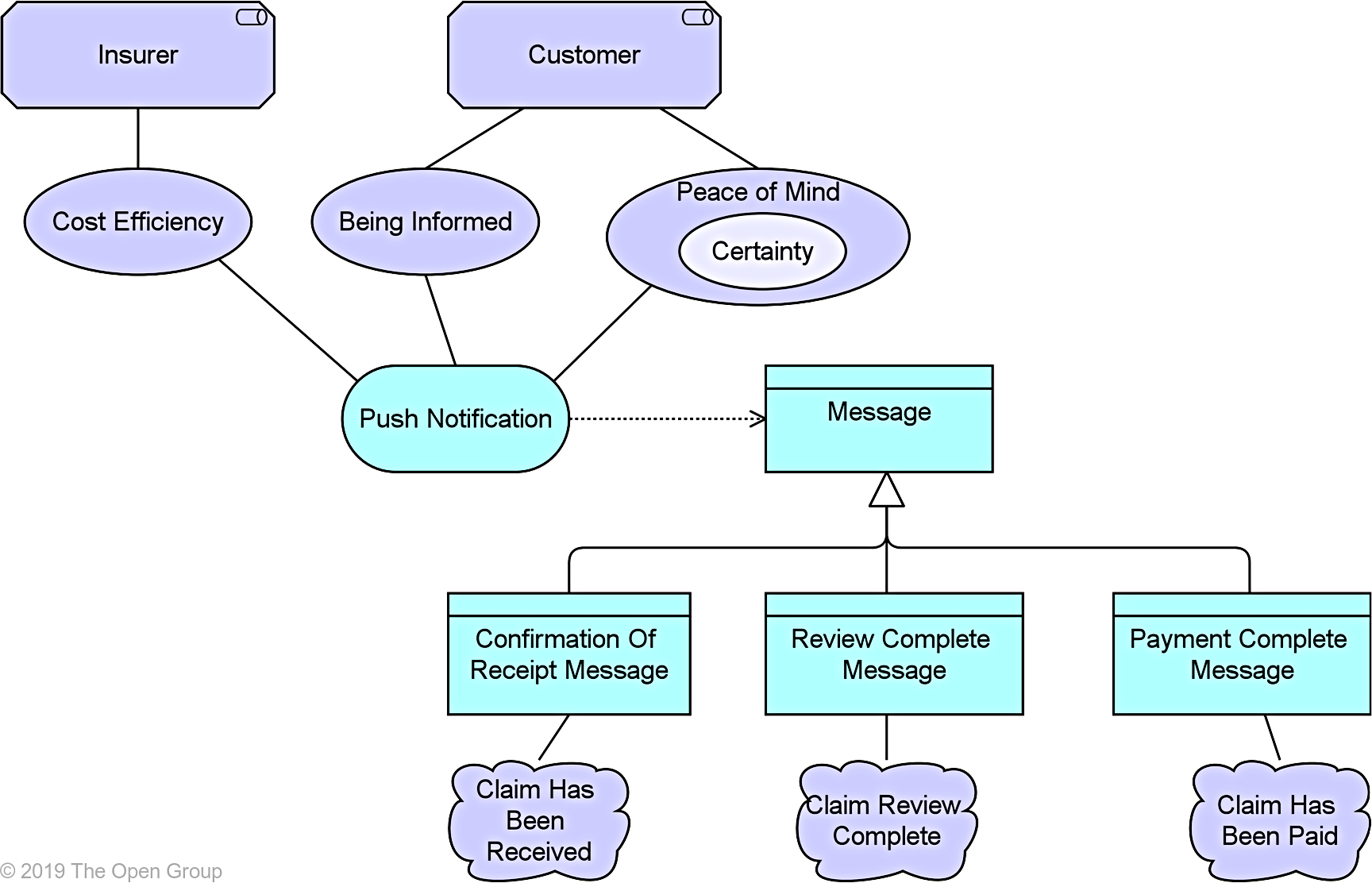
Key Viewpoints in the Motivation Layer
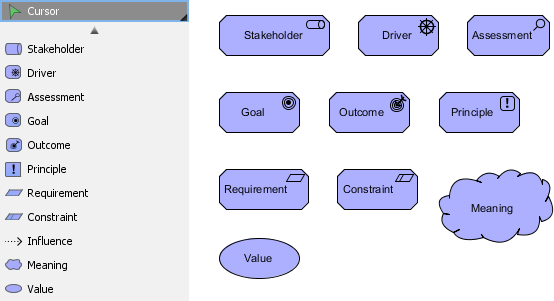
- Motivation Viewpoint: This provides a holistic framework to model the overarching motivations that guide an enterprise’s direction. It allows architects to map stakeholders, drivers, goals, and requirements in a structured, interconnected manner. For example, a healthcare organization might use this viewpoint to model the motivation behind a digitization initiative, tracing it from patient safety goals to workforce training needs.
- Stakeholder Viewpoint: Specifically designed to identify and analyze the concerns of internal and external stakeholders. By capturing stakeholder expectations—such as regulatory compliance, operational efficiency, or innovation pressure—this viewpoint ensures that architectural designs are responsive and inclusive of diverse perspectives.
- Goal Realization Viewpoint: Bridges the gap between high-level strategic goals and concrete implementation requirements. It enables architects to break down a goal like ‘improve supply chain visibility’ into operational requirements, tie them to specific systems or processes, and visualize how these are realized through technology and organizational changes.
- Strategy Viewpoint: Offers a high-level, executive-oriented view of the enterprise’s long-term direction. Business architects use it to articulate strategic capabilities, such as ‘digital transformation,’ ‘market expansion,’ or ‘risk mitigation,’ and to map these to key business capabilities and capabilities maturity.
These viewpoints are not isolated; they interact dynamically. For example, a stakeholder concern about data privacy may trigger a goal in the Motivation Layer, which then cascades into a requirement for secure data handling in the Application Layer—enabling end-to-end traceability.
Why Visual Paradigm is the Premier Tool for Motivation Layer Modeling
While many tools offer basic ArchiMate support, only a few provide the full spectrum of capabilities required to model complex, stakeholder-driven motivations with precision and scalability. Visual Paradigm stands out as the industry-leading solution for enterprise architecture modeling, particularly in the area of motivation layer implementation.
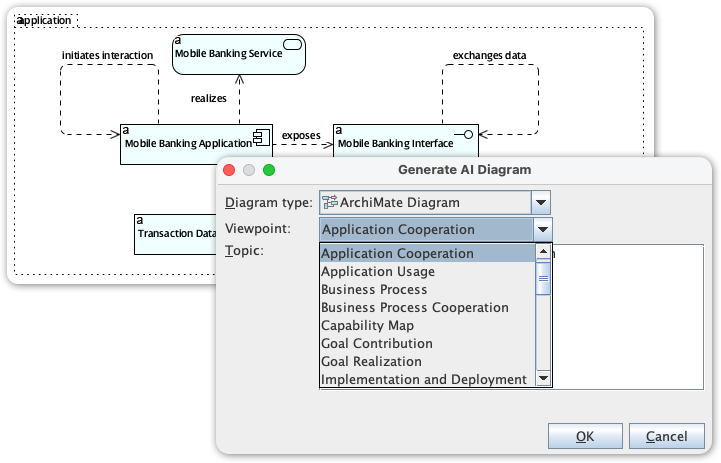
Its deep integration with the official ArchiMate 3.2 standard—certified by the ArchiMate community—ensures that every element, relationship, and notation adheres strictly to the specification. This compliance is critical for organizations undergoing formal accreditation, internal audits, or governance reviews where model validity and consistency are paramount.
Beyond compliance, Visual Paradigm delivers a comprehensive suite of features that transform the modeling process from labor-intensive to intuitive and efficient—one of which is its advanced AI-powered modeling assistant.
VP AI: How Visual Paradigm AI Enhances Motivation Layer Modeling
Visual Paradigm’s AI is not a generic language model. It is a context-aware, domain-specific intelligence trained explicitly on the ArchiMate framework, enabling architects to generate, refine, and validate models with minimal input.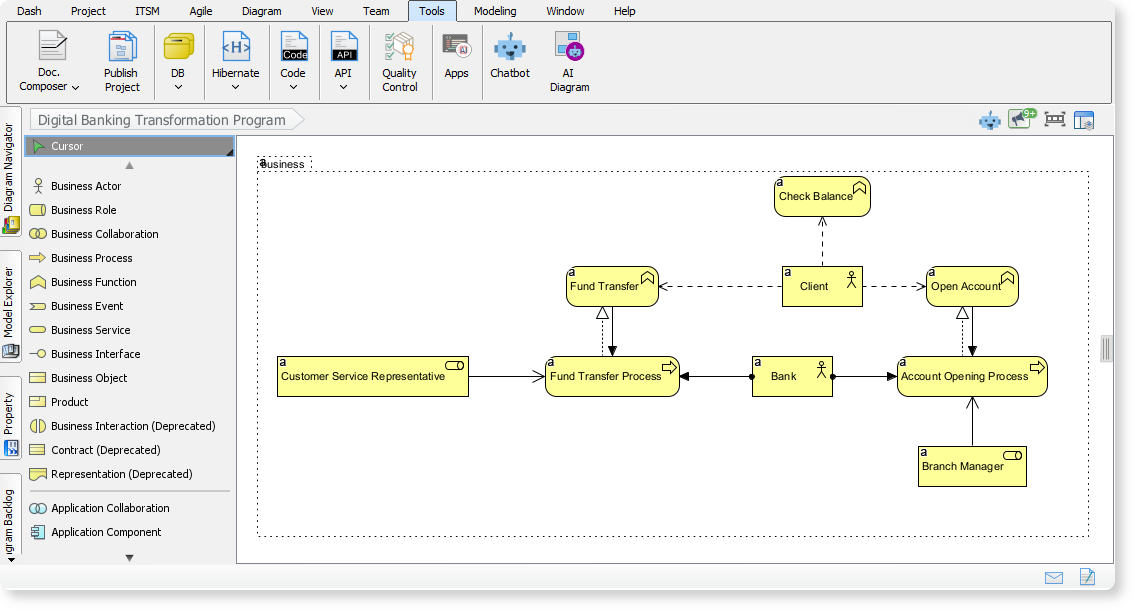
Natural Language to Diagram Generation
Architects can describe complex scenarios in plain English and generate complete ArchiMate diagrams in seconds. For instance, entering a prompt like ‘Model the motivation behind a cloud migration initiative focused on reducing operational costs and improving disaster recovery’ will automatically generate a multi-layered diagram that includes:
- Stakeholder concerns (cost, uptime)
- Business goals (cost reduction by 15%, 99.9% availability)
- Strategic initiatives (cloud adoption, resilience)
- Linked requirements (scalability, redundancy)
This capability is especially valuable during early-stage planning or in cross-functional meetings where stakeholders communicate in natural language rather than architectural jargon.
Context-Aware Refinement and Logical Consistency
Unlike generic AI tools that generate content without understanding context, Visual Paradigm’s AI maintains logical consistency and naming coherence. If an architect adds a new requirement like ‘Support 24/7 operations,’ the AI automatically:
- Identifies relevant existing goals (e.g., ‘improve service availability’)
- Links the new requirement to the appropriate stakeholder or business goal
- Ensures naming conventions (e.g., ‘SLA-24×7’) remain consistent
- Applies correct ArchiMate notations (e.g., ‘Drives’ or ‘Realizes’)
This intelligent refinement prevents modeling errors and ensures that every added element serves a clear purpose within the architecture.
Instant Viewpoint Generation
Instead of manually constructing viewpoints—such as the Stakeholder or Goal Realization Viewpoints—Visual Paradigm’s AI can generate them in seconds based on user input. For example, simply typing ‘Generate a Stakeholder Viewpoint for a fintech startup’ results in a fully structured, compliant viewpoint with relevant stakeholders, their concerns, and linked goals.
This feature dramatically reduces the onboarding time for new architects and accelerates the development of enterprise models, especially in fast-moving industries like fintech, healthcare, or logistics.
Full Compliance with ArchiMate 3.2 Standards
Because Visual Paradigm is officially certified as an ArchiMate 3.2 compliant tool, its AI does not introduce syntax errors, invalid relationships, or semantic mismatches. It understands the formal structure of the language—including the hierarchy, element types, and relationship semantics—ensuring that every output is valid and can be used in formal reviews or governance processes.
This level of fidelity is critical for compliance with frameworks such as TOGAF, ISO 30100, or even internal enterprise governance standards where model integrity is non-negotiable.
Traceability Through the TOGAF Guide-Through Process
Visual Paradigm supports the TOGAF Guide-Through Process, providing end-to-end traceability from high-level business goals in the Motivation Layer down to technical capabilities in the Technology Layer. For example, a goal like ‘Reduce customer complaint resolution time’ can be directly linked to a system requirement in the Application Layer, with clear path traces showing how each element contributes to value realization.
This ensures that architectural decisions are not made in isolation but are explicitly tied to business outcomes—enabling better decision-making, accountability, and project success rates.
VP Tools & Resources for Motivation Layer Implementation
Visual Paradigm offers a complete ecosystem of tools and resources to support every phase of enterprise architecture modeling, especially in the Motivation Layer:
- ArchiMate 3.2 Viewpoint Library: Pre-built, standardized viewpoints for Motivation, Business, Application, and Technology layers, enabling rapid modeling and consistent stakeholder alignment.
- AI-Powered Chatbot: A real-time assistant that translates natural language inputs into accurate ArchiMate elements and relationships.
- Traceability Matrix Tool: Enables architects to map goals, requirements, and stakeholders across layers, ensuring no value is lost in translation.
- Collaboration & Version Control: Team-based modeling with version history, comments, and change tracking ensures transparency and auditability.
- Export & Presentation Features: Generate professional reports, presentations, or stakeholder summaries from the model—critical when presenting motivations to executives or board members.
These tools collectively form a robust environment that supports both novice and experienced architects in building compelling, auditable, and stakeholder-aligned models.
VP Features That Enable Effective Motivation Layer Modeling
Below are the core features of Visual Paradigm that directly address the challenges of modeling the Motivation Layer:
1. Context-Aware AI Modeling Assistant
The AI does not simply generate elements—it understands the architectural context. When a user inputs a business goal, the AI identifies relevant stakeholders, suggests linked requirements, and recommends appropriate viewpoints to use. This reduces cognitive load, minimizes modeling errors, and improves model coherence.
2. Certified ArchiMate 3.2 Compliance
Every element, relationship, and viewpoint in Visual Paradigm is validated against the official ArchiMate 3.2 specification. This means:
- No unsupported syntax
- No invalid element types
- Correct use of notation (e.g., ‘Drives’, ‘Enables’, ‘Realizes’)
- Proper layering and view structure
This compliance is essential for enterprises undergoing formal audits or using ArchiMate as part of a defined governance framework.
3. Dynamic Viewpoint Generation
Instead of relying on predefined templates, architects can dynamically generate viewpoints tailored to specific use cases. For example, a government agency might generate a ‘Regulatory Compliance Viewpoint’ with stakeholders such as auditors, legal teams, and compliance officers, directly linking their concerns to operational goals.
4. End-to-End Traceability
Visual Paradigm enables full traceability between the Motivation Layer and all subsequent layers. For instance, a business goal like ‘Enhance customer experience’ can be traced through:
- Stakeholder concern (customer dissatisfaction)
- Goal (improve service response time)
- Requirement (reduce ticket resolution time from 48 to 24 hours)
- Technical capability (automated ticket routing in the Support Application)
This traceability ensures that every architectural decision is justified and aligned with strategic intent—critical for justifying investments and managing change.
5. Integrated Stakeholder Management
The platform supports the creation of detailed stakeholder profiles, including their interests, concerns, and influence levels. This allows architects to model how different stakeholder demands shape the motivation layer and ultimately influence technical designs.
For example, in a banking organization, the AI can help model how regulatory stakeholders demand data privacy, while customer stakeholders demand faster response times—leading to a balanced architecture that fulfills both demands.
Real-World Application: Building a Cloud Migration Strategy with Motivation Layer Modeling
Consider a large financial institution planning a cloud migration. The project team uses Visual Paradigm to model the motivation behind the initiative:
- They define the goal: ‘Achieve 99.99% uptime in cloud environments by Q4 2026’
- They identify the stakeholders: Compliance officers, operations teams, and customer service leaders
- They establish the motivations: Cost reduction, regulatory compliance, and service continuity
- They define the requirements: Automated failover, real-time monitoring, audit trails
- Using the Strategy Viewpoint, they map this to long-term capabilities like ‘resilient digital infrastructure’
Using the Visual Paradigm AI, they generate the full model in minutes. The AI automatically creates the correct relationships, applies proper notations, and ensures compliance with ArchiMate 3.2 standards. The resulting model is then used to guide the technical design, budgeting, and stakeholder communication—ensuring alignment across business and IT.
Conclusion
The Motivation Layer is the compass of enterprise architecture—a clear, structured representation of the ‘why’ behind every decision. Without it, even the most sophisticated technical designs risk being misaligned with business strategy.
Visual Paradigm, with its certified ArchiMate 3.2 support and AI-powered modeling capabilities, provides a powerful, intelligent, and compliant platform to build, refine, and communicate these motivations effectively. By combining human expertise with intelligent automation, it enables architects to model complex stakeholder dynamics, ensure traceability, and produce high-quality, governance-ready models—positioning the enterprise for sustainable, value-driven innovation.
Articles and guides regarding AI-powered ArchiMate modeling and enterprise architecture within the Visual Paradigm ecosystem:
-
Comprehensive Tutorial: Using ArchiMate with TOGAF ADM and AI: This tutorial explores how the AI Diagram Generator and chatbot facilitate enterprise architecture modeling by keeping complex systems aligned through contextual instruction interpreting.
-
AI ArchiMate Diagram Generator: This resource details how to use AI-powered automation to generate standard-compliant ArchiMate diagrams for various modeling projects.
-
AI-Powered ArchiMate Viewpoint Generation for Enterprise Architects: A look at how AI allows architects to produce specialized viewpoints in seconds, drastically accelerating the enterprise modeling lifecycle.
-
Introducing AI-Powered ArchiMate Viewpoints Generator in Visual Paradigm: This release announcement focuses on an AI-driven tool that automates the creation of enterprise architecture views, enhancing efficiency and accuracy.
-
AI-Powered ArchiMate Modeling Guide | Visual Paradigm Enterprise: A comprehensive guide explaining how the AI generator uses Natural Language Processing (NLP) to produce standard ArchiMate 3 diagrams.
-
Guide to Visual Paradigm AI ArchiMate Generator | Enterprise Architecture: This technical resource discusses support for ArchiMate 3.1 vocabulary and notation while maintaining traceability among views.
-
Visual Paradigm AI Platform: A Comprehensive ArchiMate Guide: An analysis of how the platform’s domain-specific intelligence and persistent visual structures outperform generic LLMs for architectural tasks.
-
How to Use AI for ArchiMate Modeling in TOGAF ADM | Visual Paradigm Guide: This guide explains the use of NLP to convert text inputs into diagrams that support all official viewpoints required by the ADM cycle.
-
How to Use ArchiMate to Visualize Information Flows with AI: This article highlights how the AI modeling assistant understands ArchiMate-specific concepts like information flows and business-technology alignment.
-
ArchiMate Explained: A Guide to AI-Powered Enterprise Architecture: An introductory guide showing how an AI assistant acts as a transformative partner to help organizations design their future architecture with speed and clarity.